Competitive play
Risk Tournament Guide
In a MajorCommand tournament, you do not just join one standalone game. You enter an organized event comprised of one or more rounds. In each round, you participate in a game that will progress you to the next round until you reach the final match.
This guide explains the public basics: how tournaments are joined, how rounds work, how players progress, and what kind of fair play is expected. It is not a full gameplay tutorial. If you are still learning the basic turn flow, start with How to Play Risk Online first.
What MajorCommand Tournaments Are
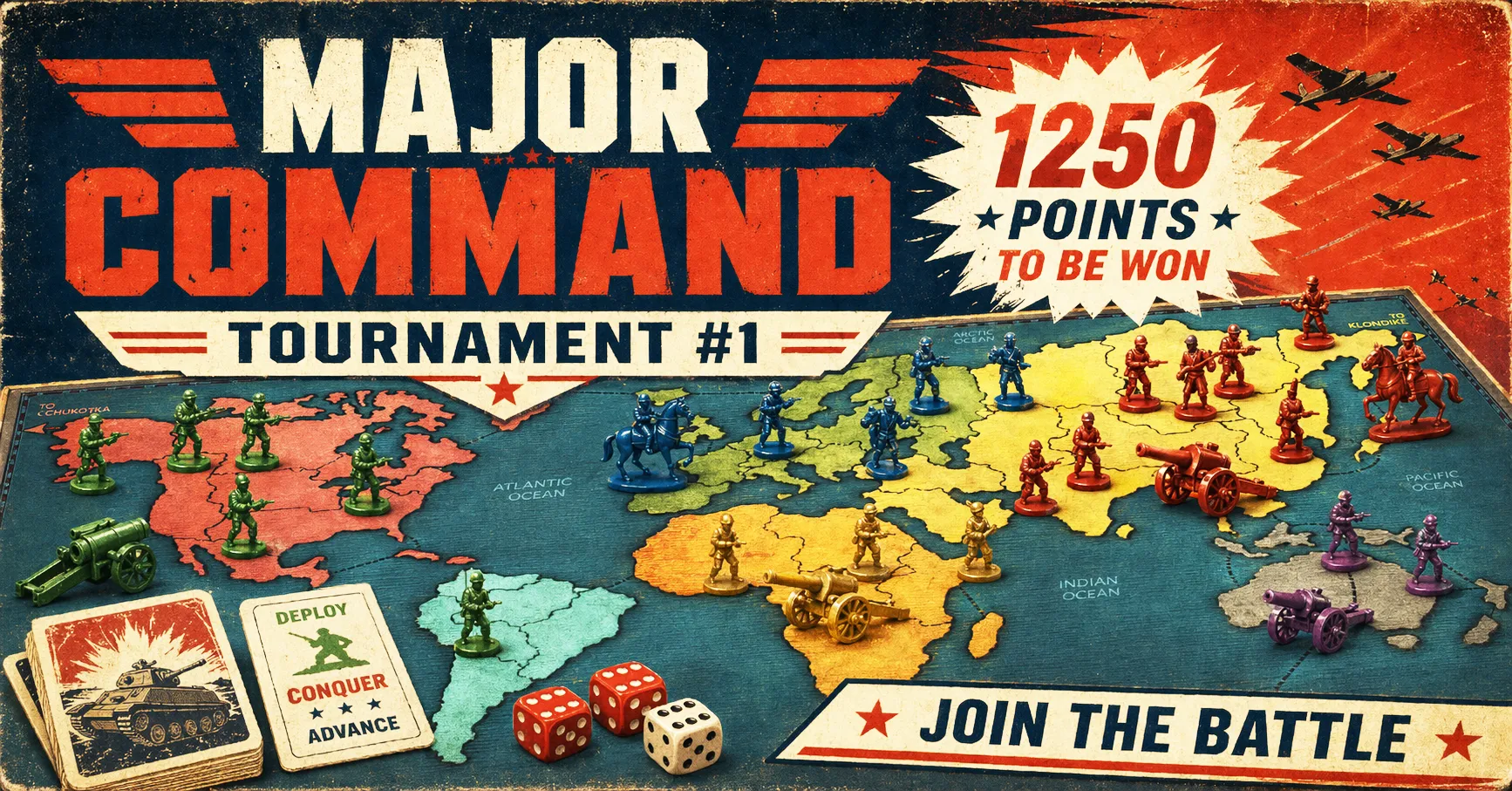
A MajorCommand tournament is a competitive event built from one or more Risk-style games. Each tournament has its own structure, player count, maps, settings, and progression path.
The basic idea is simple: once you have an account, the Tournaments area lets you view available events, join eligible tournaments, compete in the assigned games, and try to advance through the rounds. The exact format can vary, but the purpose is always the same: give players a more organized competitive challenge than a single casual game.
Tournaments can be a good fit if you enjoy planned competition, want to test yourself across more than one game, or like the feeling of working toward a final placement rather than playing only one isolated match.
How Joining Works
Once you have logged into MajorCommand, you can enter tournaments from the tournament page. Before joining, read the tournament details carefully. Check the map, player count, round structure, settings, point buy-in, point payout, and any entry requirements.
MajorCommand tournament buy-ins and payouts use game/account points, not real-world cash. Check the event details before joining so you understand what is being committed and what may be awarded.
The most important beginner advice is to join tournaments you can realistically finish. Tournament games affect other players too, so do not enter if you already know you cannot keep up with the expected pace.
Rounds, Games, and Progression
Tournaments are organized into rounds. A round may contain one game or multiple games, depending on how the event is designed.
Each round can use its own map and settings. That means a tournament may test more than one skill: reading the board, adapting to different player counts, handling changing objectives, and making smart decisions under pressure.
When a round is complete, winners or qualifying players move forward according to the tournament structure. Later rounds narrow the field until the final result is decided.
Winning, Placement, and Competitive Play
Winning a tournament game is not always the same as winning the whole tournament. In a multi-round event, each game is part of a larger path.
Placement depends on the tournament format. Some events may advance only the top player from a game. Others may allow multiple players or teams to progress. Final placements and point payouts depend on the tournament's structure.
Treat the details on the tournament page as the source for that specific event. The map, settings, number of players, teams, and round structure all affect how the tournament should be played.
If you care about long-term progression, tournaments can also connect naturally with competitive identity. To understand the broader progression system, visit MajorCommand Ranking System: All 31 Ranks.
Tournament Etiquette and Fair Play
Tournament play works best when players take the event seriously and respect the other people involved.
Play to win, but play fairly. Do not use second accounts, hidden partners, outside coordination, or private agreements to create an unfair advantage. Do not exploit bugs or loopholes. If something seems wrong, report it rather than using it.
Be mindful of your pace. Missing turns or abandoning games can affect more than one match and make the tournament worse for other players.
Competitive play can be tense, and close games can be frustrating. Keep the table respectful. Good banter is fine. Personal abuse, harassment, threats, and deliberate disruption are not.
For the full community standard, read the MajorCommand Code of Conduct.
Where to Go Next
If you are new to MajorCommand, learn the game basics before joining a tournament. Tournaments are more fun when you understand the turn flow, map settings, and basic strategy.
- Start with How to Play Risk Online if you are still learning the basic game loop.
- Read the FAQ if you have questions about accounts, maps, ranks, fair play, or getting started.
- Visit MajorCommand Ranking System: All 31 Ranks if you want to understand competitive progression.
- Return to the MajorCommand homepage when you are ready to start playing.
Ready to join the competition?
Once the tournament flow makes sense, create an account or sign in to find an available tournament that matches your pace, points, maps, and settings.